Will CBD Show Up on a Drug Test? What Tests Look For
Drug tests look for THC, not CBD. But some CBD products contain THC, and mislabeled products are common. Here is how testing works and how to lower your risk.
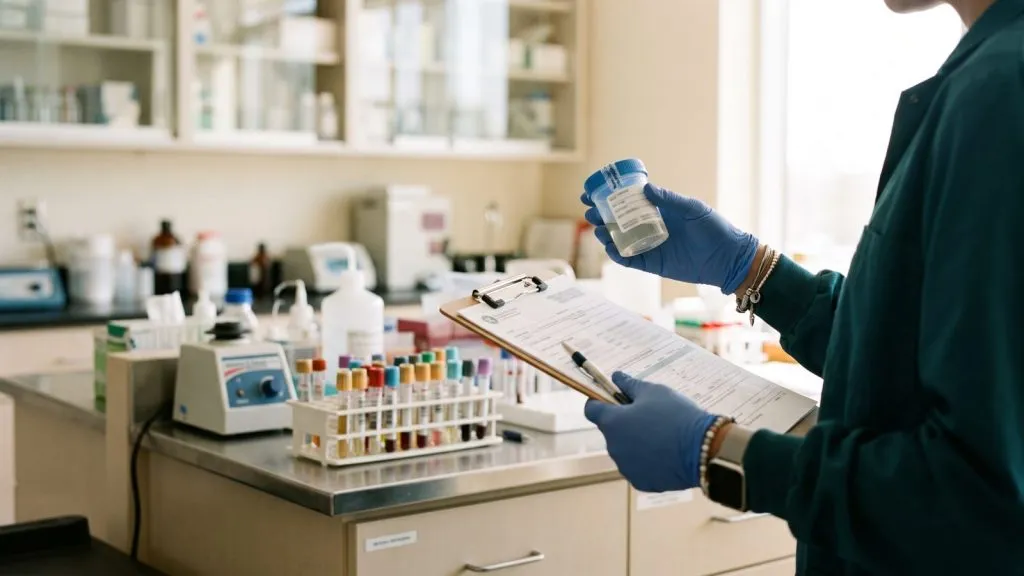
If you are drug tested for work, sports or a court program, this is the most important question to ask before you try CBD. The short answer: standard drug tests do not look for CBD. They look for THC. The problem is that some CBD products contain THC, sometimes more than the label says.
This guide explains how drug tests work, why people who use CBD sometimes test positive, and what you can do to lower the risk.
Key takeaways
- Common drug tests screen for a THC breakdown product, not CBD.
- Full spectrum CBD contains small amounts of THC that can add up with regular use.
- Mislabeled products are a real risk. Always check the lab report.
- No CBD product can guarantee a negative test. If a positive result would cost you your job, talk with your employer or doctor first.
What drug tests actually look for
Most workplace drug tests use urine. The first step is a quick screening test called an immunoassay. If it flags a sample, a lab runs a second, more precise test, usually gas or liquid chromatography with mass spectrometry, to confirm it.
For cannabis, both tests look for THC-COOH, a compound your body makes when it breaks down THC. Federal workplace guidelines set the screening cutoff at 50 nanograms per milliliter and the confirmation cutoff at 15 ng/mL. Results above those levels are reported as positive.
Standard panels do not test for CBD. A few specialty tests can, but they are rarely used for employment screening.
So why do some CBD users test positive?
1. The product contains THC
Full spectrum CBD keeps most of the hemp plant’s compounds, including up to 0.3% Delta-9 THC by dry weight. That is a small amount, but THC is stored in body fat and can build up with daily use. A larger serving of a full spectrum oil can contain several milligrams of THC.
2. The label is wrong
Mislabeling has been a long-running problem in the CBD market. A widely cited 2017 study in the journal JAMA tested 84 CBD products bought online and found THC in 18 of them. Many also had more or less CBD than their labels claimed. The only way to know what is in a product is a lab report for that batch.
3. Cross-contamination
A product made on the same equipment as THC products can pick up traces of THC if the maker is careless.
4. Other sources of THC
Secondhand exposure and other cannabis products can also play a role.
Does CBD turn into THC in your body?
This question comes up often. A few lab studies suggested CBD could convert to THC in simulated stomach acid, but studies in people have not found that ordinary CBD use produces THC levels that cause a positive test. The bigger risk is THC already in the product.
How to lower your risk
- Choose CBD isolate or a broad spectrum product. Isolate contains CBD only. Broad spectrum has the THC removed. Our guide to CBD isolate vs. full spectrum explains the difference.
- Read the lab report for your batch. Look for THC results shown as ND (not detected), and check that the batch number matches your product. Our guide on how to read a CBD lab report shows you where to look.
- Look at Total THC, not just Delta-9 THC. Total THC includes THCA, which turns into THC with heat.
- Buy from brands that publish reports. If a seller cannot show you a COA, do not use the product before a test.
- Ask about your workplace policy. Some employers and sports bodies have their own rules about CBD use.
What “THC not detected” means
When a lab reports THC as ND, it means the lab did not find THC at or above the limit its method can measure. It does not prove the amount is zero, but it is a strong sign the product contains no meaningful THC. Every Airlie CBD product links a lab report showing THC as not detected. You can see all of them on our lab results page.
Even so, we cannot promise that any product will produce a negative drug test, and no honest CBD brand can. Tests, bodies and situations vary.
How long does THC stay in your system?
THC-COOH can show up in urine for a few days after a single exposure and for weeks with heavy, regular use, because THC is stored in fat. CBD has its own timeline, which we cover in how long CBD stays in your system.
If you have already tested positive
If you tested positive and believe CBD was the cause, you can usually ask the medical review officer about the result. Keep the product, its packaging and its lab report. A product with a batch-matched COA showing THC not detected is useful information to share.
Our products
We make our CBD gummy jars, topicals and tincture in small batches, and each product page shows the lab report for its batch. Topicals applied to the skin are a different exposure from products you swallow, but the same rule applies: check the report.
Frequently asked questions
Do drug tests test for CBD?
Standard workplace drug tests do not. They look for a THC breakdown product.
Can CBD isolate make you fail a drug test?
Pure CBD isolate contains no THC, so it should not. The risk comes from products that contain THC, whether or not the label says so.
Can full spectrum CBD make you fail a drug test?
Yes, it can, especially with regular use or larger servings.
Can CBD lotion or balm make you fail a drug test?
Topicals are absorbed into the skin far less than products you swallow, but a topical that contains THC is not risk-free. Check the lab report.
How can I be sure my CBD has no THC?
Read the batch-matched lab report and look for THC and Total THC shown as not detected.